

The short answer
Kava is a drink made from the root of a South Pacific plant (Piper methysticum), used for around 3,000 years and central to social life across Fiji, Vanuatu, Tonga, and Samoa, to relax, open up, and connect, without alcohol. Its active compounds are called kavalactones, and the kava effects they produce are described as: a clear-headed, sociable calm. Stress softens and conversation gets easier, with no intoxication and no hangover. You might have heard it called "nature's chill pill," or spotted it in cans and kava bars.
This guide covers what kava is, how it works, how it feels, what the benefits and risks really are, and how to try it, with the sources and studies to back it up.
This article is for general education and isn't medical advice.
What is kava?

Kava is a beverage made from the ground root of Piper methysticum, a plant in the pepper family (Piperaceae) native to the islands of the South Pacific. The root is traditionally cleaned, pounded, then kneaded and strained in cool water to make an earthy drink that's been central to social and ceremonial life for centuries.
The compounds doing the work are called kavalactones; more on those below. Traditionally it's the lateral roots of the plant that get used, because they carry the highest concentration of kavalactones, roughly two to three times more than the woody central stump.
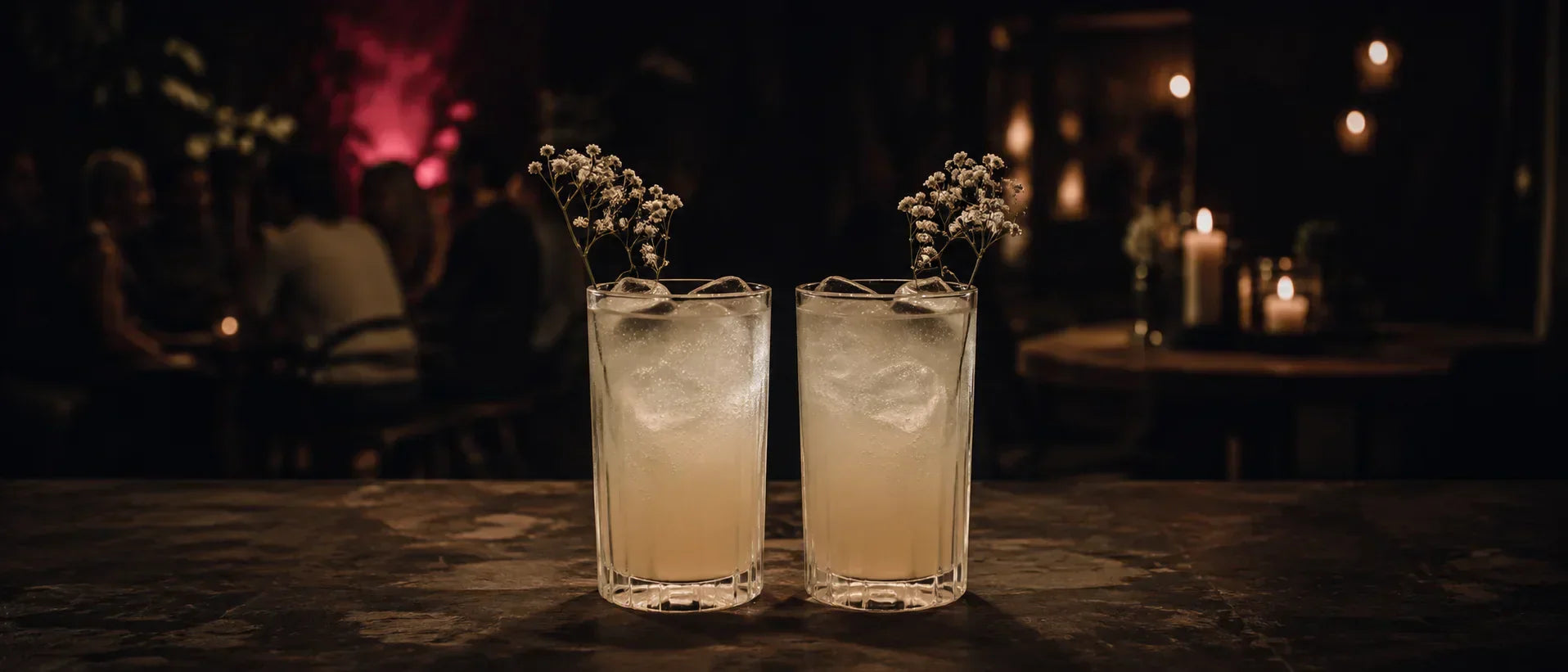
Kava is the Pacific's original social drink, the thing people gather around to talk, relax, and be present together. At TAVU we call it the third option: the drink for nights when a cocktail costs you tomorrow morning and a mocktail is just juice that does practically nothing.
Where kava comes from

Kava is native to the western Pacific (Melanesia, Polynesia, and Micronesia), where it has been cultivated and shared as a social and ceremonial drink for millennia. Pacific Island cultures serve it at welcomes, negotiations, weddings, and ordinary evening gatherings, shared from a communal bowl (a tanoa) as a gesture of peace and connection.
Botanically, Piper methysticum is a sterile domesticated cultigen: meaning, it can't reproduce from seed, and it has been propagated by hand, cutting by cutting, for thousands of years. Every kava plant alive today exists because someone, generations back, made the intentional decision to keep growing it.
Not all kava importers are equal, and we're picky about ours. TAVU uses noble kava of the Vanuatu Borogu variety, the cultivar with one of the longest safety records, and only the lateral roots, never the leaves or stems. When kava has run into trouble, it almost always traces back to those aerial parts or poor-quality product, not the noble root itself.
How does kava make you feel?

The main kava effects are relaxed, sociable, easygoing, and clear-headed all at once. Most people notice a drop in stress, looser shoulders, and easier conversation, often with a light, warm tingle around the mouth early on. (The tingle is a mild local-anesthetic effect of the kavalactones. Completely normal, mildly entertaining.) It's a grounded calm; you're not high and you're not sedated.
Here's how I described my first time: "The sky looked a little bluer than normal, and I suddenly noticed the birds chirping in the trees — they sounded closer somehow. It was a softening of reality, but not a numbing one like alcohol. I was still completely clear, present, and myself — just with the edge of the day taken off."
Onset is usually around 15–30 minutes, a little faster on a relatively empty stomach, with effects peaking over the next hour or two and easing off over the several hours after that.
One thing worth knowing up front: a lot of people feel kava more after their first few sessions, not less, so night one isn't always the full picture. (More on this reverse tolerance below.)
What are the benefits of kava?
The main kava benefits are relaxation, easier social connection, and a sense of calm, and there's controlled research pointing the same direction, though the evidence is genuinely mixed and worth reading carefully.
Here's what the research shows:
- Relaxation and everyday stress. A 2003 Cochrane review found kava extract more effective than placebo for anxiety symptoms, with side effects that were mild, transient, and infrequent (Pittler & Ernst, Cochrane Database of Systematic Reviews, 2003).
- A positive controlled trial. A six-week randomized, placebo-controlled study found a water-based kava extract significantly reduced anxiety scores versus placebo, with a moderate effect (Sarris et al., Journal of Clinical Psychopharmacology, 2013).
- The counterweight. A larger 16-week trial by the same lead researcher did not find kava outperformed placebo for generalized anxiety disorder (Sarris et al., 2020), and the U.S. National Center for Complementary and Integrative Health (NCCIH) notes kava "does not appear beneficial for generalized anxiety disorder symptoms."
The fair summary: kava may support relaxation and a sense of calm, and it has a long traditional record for exactly that. It is not a treatment for anxiety or any medical condition. If you're dealing with clinical anxiety, talk to a doctor.
These statements have not been evaluated by the Food and Drug Administration. This product is not intended to diagnose, treat, cure, or prevent any disease.
How does kava work? (Kavalactones and the science)
Kava's effects come from kavalactones, a group of active compounds believed to interact with the brain's calming GABA system, though the exact mechanism isn't fully established. There are six major kavalactones (kavain, dihydrokavain, methysticin, dihydromethysticin, yangonin, and desmethoxyyangonin), and together they make up the large majority of the active content in noble root.
Alcohol acts broadly across the brain, enhancing calming signals and suppressing excitatory ones, which is why it negatively affects coordination, judgment, and memory. Kavalactones appear to work more selectively. Research suggests they modulate GABA-A receptor activity, without binding the same site as benzodiazepines, and may also affect ion channels and neurotransmitter reuptake (Sarris et al., 2011). The practical upshot people report: calmer and more open, with motor control and clarity largely intact.
Kava's pharmacology is still an active and developing area of study.
How much kava should you drink? (Dosage and kavalactones)
Kava is measured in kavalactones, not just volume, and the sensible approach is to start low, go slow, and give it time. Kava root typically runs somewhere between about 3% and 20% total kavalactones by dry weight, depending on the variety, growing conditions, and part of the root. That spread is a big part of why not all kava feels the same.
Clinical studies of kava for relaxation have generally used in the range of roughly 120–240 mg of kavalactones per day (Sarris et al., 2013). A traditional "shell" at a kava bar usually lands somewhere around 150 to 250 mg of kavalactones, and a modern ready-to-drink can is a different serving size again, so the number that matters is the kavalactone content, not the ounces.
The same dose does not land the same way on everyone. Three things change how strongly you feel it:

- Your genes. Kavalactones are broken down in part by a liver enzyme called CYP2D6, and people fall into four groups: poor, intermediate, efficient, and ultrarapid metabolizers (Rowe et al., 2011). In principle, a poor metabolizer feels a modest serving more strongly and for longer, while an ultrarapid one may barely notice it (that's inferred from the genetics, not measured directly for how kava feels). Kava also partly inhibits CYP2D6, which is a big reason it can interact with prescription medications (Mathews et al., 2002).
- Your body size. A fixed amount of kavalactones is effectively diluted across your body mass, so the same can tends to hit a lighter person harder than a heavier one.
- Whether you've eaten. Taking kava with a meal significantly reduces how much of the kavalactones you absorb (Kanumuri et al., 2022), so a full stomach makes the same can feel lighter than an empty one.
Put simply: two people can drink the exact same kava and have very different nights.
That variability is exactly why we standardize. Each can of UNWIND is standardized to 200 mg of kavalactones. We found this to be the "sweet spot" where you feel a gentle lift without it feeling overwhelming.
One more thing before your first sip. Many kava drinkers report a reverse tolerance, where the effects build over your first few sessions rather than fading. Nobody has proven it in a lab, but it's consistent enough in the community that we tell every first-timer the same thing: don't judge kava on night one. The more often you drink it, the more you tend to feel it.
Noble kava vs. other kava
Noble kava is the traditionally cultivated, daily-drinking variety, prized for a smoother feel and a better safety profile. The thing to avoid is "tudei" (literally "two-day") and other non-noble material: cheaper, harsher, and higher in the compounds linked to nausea and next-day grogginess.
Growers tell cultivars apart using a chemotype, a shorthand code ranking those six kavalactones by abundance. Noble kavas have a characteristic profile selected over centuries for exactly the experience you want. When you're buying, noble is the word to look for on the label.
Variety is only half the quality story, though. How the kava is extracted is the other half, and it's one of the biggest dividing lines of all. That's why TAVU uses supercritical CO2 extract, made in an ISO-certified facility and lab-tested for purity and chemotype.
Supercritical CO2 is a clean, food-grade process: the CO2 does the work of a solvent under pressure, then evaporates off as a gas, so there's no chemical solvent residue left behind, just concentrated, consistent kavalactones. It's a world away from the cheap acetone- or ethanol-based extracts, which pull far more of the harsh, undesirable compounds (like the flavokavains) along with the good stuff.
Is kava safe?
For most healthy adults, traditional noble-root kava prepared in water has a reassuring safety record. The FAO/WHO's 2016 review concluded it is possible to consume traditional kava beverage with an acceptably low level of health risk. It isn't risk-free, though, and the details matter. This is the part people worry about most, so let's be straight about it.
You may have heard kava linked to liver problems. That concern is real but specific. In 2002, the U.S. FDA issued a consumer advisory after rare reports of severe liver injury associated with kava supplements, and Germany pulled kava medicinal products from the market that same year (a ban German courts later overturned in 2014 and upheld in 2015).
When researchers looked closely, most of those rare cases traced back to a handful of avoidable factors:
- Non-noble ("tudei") kava rather than noble root
- The wrong plant parts (leaves and stems instead of root)
- Poor-quality, concentrated, or contaminated products (including mould from bad storage), rather than traditional water-based preparation
- Combining kava with alcohol or liver-processed medications
- Pre-existing liver conditions
That's the throughline the science supports: noble root prepared traditionally has the reassuring record, while non-noble (tudei) kava, aerial plant parts, and poor-quality or contaminated products are where the risk concentrates. (Extraction quality matters too. Flavokavain B, the compound most implicated in kava's rare liver cases, is exactly what a clean supercritical CO2 extract of noble root keeps low, and in lab studies such an extract behaved much like noble root itself rather than like the harsher solvent extracts.) It's also why we're specific about what we use: noble Vanuatu Borogu lateral root, supercritical CO2 extract, made in an ISO-certified facility and lab-tested for purity and chemotype so every batch is verified before it ever reaches a can.
None of that makes kava risk-free, and how you use it is within your control.
Who should not drink kava
Kava isn't for everyone. Skip it, or talk to your doctor first, if you:
- Have liver disease or any liver condition (FDA, 2002).
- Drink alcohol that session. Never combine kava with alcohol.
- Take sedatives, benzodiazepines, sleep aids, or other CNS depressants (NCCIH).
- Take prescription medications, especially anything processed by the liver. Check with your provider first.
- Are pregnant or breastfeeding (NCCIH advises avoiding kava).
And don't drive or operate machinery if you feel any drowsiness (see the driving section below).
Can you drink kava every day?
Occasional to moderate use is typical. The one thing tied to very heavy, long-term daily drinking is a dry, scaly skin condition called kava dermopathy, and even that is harmless and clears up completely once you cut back (NCCIH). It's reversible and clears up when you cut back or stop. As with anything, dose and frequency matter; a can with friends on a Friday is a different thing from bowls of strong kava every day for months. And drinking too much in one sitting can bring on nausea and heavy drowsiness well before anything good, so more is genuinely not better here.
Is kava addictive?
Kava is not considered addictive the way alcohol or benzodiazepines are, and controlled trials at medicinal doses found no signs of dependence or withdrawal (Sarris et al., 2013). Those findings come from clinical-dose studies rather than long-term heavy-use populations, so it's not a blank cheque, but kava doesn't create the physical dependence loop that defines an addictive substance. Can heavy, habitual use become a psychological habit? Sure, the way anything enjoyable can, and rare case reports of dependence do exist. Still, the absence of that dependence loop is one of the biggest reasons kava has drawn interest as an alcohol alternative.
Can you drive on kava?
A controlled study found that a single medicinal dose of kava (180 mg kavalactones) did not significantly impair driving in a simulator, unlike a benzodiazepine, which did. That is not a green light to drive on kava. (Sarris et al., Traffic Injury Prevention, 2013.) Kava can cause drowsiness at higher doses, health authorities including the NCCIH advise caution around driving and machinery, and the legal picture around impairment varies. The rule I'd give anyone: if you feel even slightly off, don't drive. Treat it the way you'd treat anything that can make you sleepy.
Kava vs. alcohol
Kava gives you a lot of the good part of a drink (social ease, a relaxed body, a softer evening) without the impairment or the hangover. Both kava and alcohol touch the GABA system, but alcohol also suppresses the brain's excitatory signaling, which is what produces slurred speech, wobbly balance, and next-day regret. Kava drinkers typically report calm with their clarity and coordination intact, and no alcohol-style hangover.
Kava is also non-alcoholic by definition (0% ABV). For the record, I have nothing against a good drink. I just don't think alcohol should be the only thing on offer when you want to unwind with people.
Kava vs. kratom

Kava and kratom get mentioned in the same breath, but they're completely different plants with different mechanisms and very different risk profiles. Kratom (Mitragyna speciosa) is a tree in the coffee family whose alkaloids act on the body's opioid receptors, which brings a meaningfully higher risk of tolerance, dependence, and withdrawal. Kava (Piper methysticum) works through non-opioid pathways and isn't considered addictive at studied doses. They also sit in different legal territory in the U.S.: kava is a legal dietary supplement, while kratom, as of 2026, is federally unregulated (a federal scheduling review is pending) and banned in some states and cities. If you're choosing between them as an alcohol alternative, they are not interchangeable.
Here's the quick version:
| Kava | Kratom | Alcohol | |
|---|---|---|---|
| Plant | Piper methysticum (pepper family) | Mitragyna speciosa (coffee family) | n/a (fermented) |
| Acts on | GABA system (non-opioid) | Opioid receptors | GABA + broad CNS |
| Feel | Calm, clear-headed, social | Stimulant-to-sedative, opioid-like | Disinhibited, then impaired |
| Dependence risk | Low; rare dependence reports | Higher (tolerance/withdrawal) | High |
| Hangover | Minimal; rarely reported | Possible | Yes |
| US legal status | Legal dietary supplement | Unregulated (review pending); banned in some states | Legal, regulated |
What does kava taste like?
Kava tastes earthy, peppery, and root-forward. Traditional preparations lean all the way into it. Modern drinks balance it. We formulated UNWIND to work with the mild earthy taste of the kava extract by using real botanical ingredients and fresh juice for a refreshing, fruity taste.
How to try kava

You've got a few routes, each a different trade-off between ritual and convenience: prepare traditional root powder yourself, use a micronized or instant kava powder, visit a kava bar, or (easiest) reach for a ready-to-drink kava beverage.
Traditional prep means kneading ground noble root in cool water and straining it through a fine bag. It's part of the ritual, and it is also, frankly, a project.
Micronized and instant powders are the middle ground, no straining required. Micronized kava is just whole root ground ultra-fine, so you stir it straight into water and drink it, fiber and all. It's quick, though a little grittier, because the powder stays suspended rather than truly dissolving. Instant kava goes a step further: it's brewed the traditional way, then filtered and dried into a soluble powder that mixes into water cleanly with almost no sediment. So micronized keeps you closer to the traditional texture, while instant is the fastest and smoothest of the powders.
A kava bar does the work for you and comes with the social atmosphere included. And a good canned kava drink gives you the effect with none of the effort.
I wanted something that tasted really good and was super convenient to take with me anywhere. So that is why I made UNWIND, a noble-kava sparkling drink built to be the simplest good first sip: noble kava, real effect, no hangover, and a great taste (I hope you agree). Whichever way you start, start low, give it a few sessions, and drink it the way it was always meant to be drunk: with people.
Age matters too. Kava gains kavalactones and smooths out as the plant matures, which is why the best root comes from plants around four to five years old.
Frequently asked questions
What is kava used for?
Kava is used for relaxation, social ease, and everyday stress relief, traditionally as a communal social drink across the South Pacific, and today increasingly as an alcohol alternative. It may support a sense of calm, but it isn't a treatment for any medical condition.
Does kava get you high or drunk?
No. Kava produces a clear-headed, sociable calm rather than intoxication. You stay present, coherent, and in control, which is the opposite of being drunk.
Is kava legal?
In the United States, kava is legal to buy and sell and is regulated as a dietary supplement, not a controlled substance. Some other countries restrict it.
How long does kava take to work, and how long does it last?
Effects are generally reported within about 15–30 minutes, sooner on a relatively empty stomach. They tend to peak over the first hour or two and ease off across the several hours after that.
Is kava safe for your liver?
For most healthy adults, traditional noble-root kava prepared in water has a reassuring safety record, and the FAO/WHO's 2016 review found an acceptably low level of health risk for traditional use. Rare liver-injury cases have mostly involved non-noble kava, non-root plant parts, poor-quality or contaminated products, or mixing kava with alcohol or medications. Avoid kava if you have liver problems or drink alcohol, and talk to your doctor if you take medication.
What does kava feel like the first time?
Most first-timers feel a gentle calm and a brief tongue-and-lip tingle. Some feel it more strongly only after a few sessions, a widely reported effect called reverse tolerance, so it's worth trying more than once before you judge it.
About the author
Written by Amber Spencer, co-founder of TAVU. Amber is a former tech executive who lost her ability to drink alcohol after a serious medical event, then spent years hunting for something that gave her back the feeling of a drink, not just the liquid in the glass. That search led her to noble kava and eventually to building TAVU. She has tasted her way through more kava cultivars than she can count and works hands-on with TAVU's sourcing and formulation, so everything in this guide comes from someone who actually drinks the stuff. Learn more about TAVU.
This article is for general education and isn't medical advice. Talk to a healthcare professional before trying kava if you take medication, have a health condition, or are pregnant or breastfeeding.